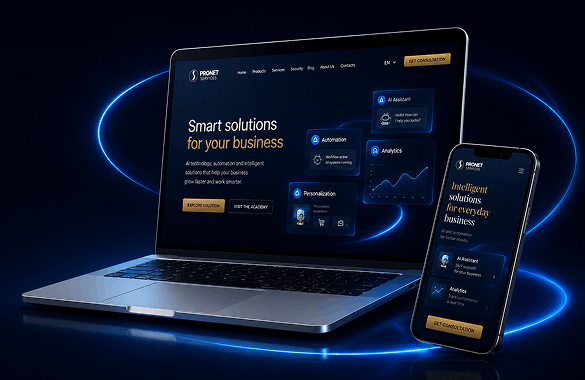
The phrase is on every agency landing page and means almost nothing. Here are the four features that genuinely change how visitors behave, what they cost in time, and how to brief a developer so you get them.
The phrase has been worn out
"AI-powered website" now describes everything from a serious recommendation engine to a chat bubble that answers one question badly. Because the label covers both, it tells a buyer nothing — and that is a problem when you are the one paying for it.
It helps to drop the label and ask a narrower question instead: what should this site do that a static brochure cannot? There are only a handful of good answers, and they are worth knowing by name before you talk to anyone.
Four features that genuinely change behaviour
These are the ones we see earn their cost. Everything else tends to be decoration.
- A chatbot with actual grounding. The difference between useful and embarrassing is whether it answers from your prices, your availability and your policies — or from general knowledge. One is a sales assistant; the other is a liability.
- Personalised content. Returning visitors see what they looked at last time; a visitor arriving from a hotel-industry ad sees hotel examples first. Small, and it measurably shortens the path to an enquiry.
- Automation behind the form. A request that lands in the right inbox, tagged by topic, with a reply already drafted. The visible part is a form; the value is that nothing waits for someone to notice it.
- Analytics that answer questions. Not a dashboard of pageviews, but a setup that tells you which page produced the enquiry and which campaign produced the page visit.
What it costs in time
A focused site with AI functionality is a two-to-six week project, not a two-day one. The design and build are usually the predictable part. What stretches a timeline is content: a grounded chatbot needs your real answers written down, and most businesses discover halfway through that they have never written them down.
Budget for that honestly. If the content is ready, two weeks is realistic. If it is in three people's heads, add two more weeks and expect some workshops.
The part nobody mentions: measurement
A site that cannot tell you where its enquiries came from is a site you cannot improve, and it is an expensive place to send advertising traffic. This is the single most common gap we find when auditing existing sites — the form works, the email arrives, and nothing else is recorded.
At minimum you want: a conversion event fired when a request is actually submitted, a confirmation page the visitor can see, and those two wired into whatever ad platform you use. Without them you are paying for clicks and guessing about results.
Ask for this explicitly in your brief. It is cheap to build in at the start and tedious to retrofit.
How to brief a developer
Write down, in one page: what you sell, who you want to reach, the twenty questions customers actually ask, where enquiries should land, and what a successful month looks like in numbers. That page is worth more than a list of features.
Then ask three questions of anyone bidding. What exactly will the AI answer from? What happens when it does not know? How will I see which page produced an enquiry? Vague answers to those are the clearest signal you will get.